
Ancient Mesopotamian religion
Ancient Mesopotamian religion was a consistent polytheistic tradition spanning millennia.

Osama Shukir Muhammed Amin FRCP(Glasg) · CC BY-SA 4.0
Ancient Mesopotamian religion encompasses the religious beliefs and practices of the civilizations of ancient Mesopotamia, particularly Sumer, Akkad, Assyria, and Babylonia, from the mid-4th millennium BC into the 3rd century AD. It was a consistent and coherent tradition that adapted over millennia, involving the worship of forces of nature and later a vast pantheon of personified deities. The religion declined with the Christianization of Mesopotamia, which became significant only from the 4th century AD onward, and the last known cuneiform tablet dates to 75 AD, with temple cults largely ceasing by the 3rd century AD.
- Time Period
- mid-4th millennium BC to 3rd century AD
Lore & Background
The earliest undercurrents of Mesopotamian religious thought developed in the mid-4th millennium BC, coinciding with the invention of writing and the first clear evidence of religious practice. Sumerians and Akkadians worshipped a mother goddess (Ninhursag), with the earliest clear attestations dating to the 3rd millennium BCE. By the 3rd millennium BC, objects of worship were personified into an expansive cast of divinities. In the 2nd and 1st millennia BC, the religion emphasized personal religion and structured gods into a monarchical hierarchy, with the national god of each state as head of the pantheon.
Reader's Guide
Ancient Mesopotamian religion shaped the political structure of the region, particularly in Assyria, where the king was considered the chief servant of the god Ashur, not a god himself. Authority was seen as absolute so long as the high priest confirmed divine favor. The religion influenced the Neo-Assyrian Empire, where Ashur was promoted from local deity to overlord of a vast domain, rivaling Babylonia's Marduk. Christianity was introduced from the 2nd century AD, and Manichaeism developed in the 3rd century AD, incorporating elements of local religion. The legacy of Mesopotamian religion persisted through the Assyrian people and the Church of the East.
Did You Know?
- The earliest evidence of Mesopotamian religion dates to the mid-4th millennium BC, coinciding with the invention of writing.
- The mother goddess Ninhursag was worshipped by Sumerians and Akkadians, with the earliest clear attestations from the 3rd millennium BCE.
- In the Neo-Assyrian Empire, the king was not a god but the chief servant of the god Ashur.
- The last known cuneiform tablet dates to 75 AD, and temple cults had largely ceased by the 3rd century AD.
Roots in Settlement and the First Gods
The religious thought of ancient Mesopotamia traces its earliest stirrings to the first half of the 6th millennium BC, a period when improved irrigation systems drew people to settle permanently in the region. Because this era predates the invention of writing, the specific beliefs of those early communities remain unknown to modern scholars. The first tangible evidence of what we can recognize as Mesopotamian religion appears alongside the emergence of writing around 3500 BC, and it centered on revering natural forces as providers of sustenance to human communities. Even before this written record, Sumerian and Akkadian peoples had already been honoring a mother goddess figure known as Ninhursag during the Ubaid Period, roughly 5500 to 3700 BCE. By the 3rd millennium BC, the abstract forces of nature had been transformed into a vast and detailed cast of divine beings, each assigned a specific function within the cosmic order. This shift from impersonal natural powers to a structured pantheon of personified gods marked a fundamental turning point in how Mesopotamian peoples understood their relationship with the world around them.
The City as Divine Throne
In many Mesopotamian polities, the boundary between religious authority and political governance was essentially nonexistent. In Assyria, for instance, the state was originally structured as an oligarchy rather than a monarchy, with authority residing in the city itself. Three distinct centers of power governed: an assembly of elders, a hereditary ruler, and an annually elected official called the eponym. The ruler presided over the assembly and executed its decisions, yet he was never called king using the Akkadian term šarrum. That title was reserved exclusively for Ashur, the city's patron deity, of whom the ruler served as high priest. The human leader was designated only as steward of Assur, a title borrowed from the Sumerian word ensí. The eponym, chosen by lot each year, managed the city's economic affairs and held the power to detain citizens and seize property. These institutions—the eponym office and the steward formula—persisted as ceremonial remnants throughout the entire history of the Assyrian monarchy, testifying to how deeply the original theocratic framework was embedded in political identity.
Imperial Theology and the Rivalry of Ashur and Marduk
Under the Neo-Assyrian Empire, religious life became inseparable from imperial governance. The Assyrian king, though not himself a deity, was recognized as the chief servant of Ashur, the supreme god. His authority was considered absolute, but only so long as the high priest could confirm to the populace that the divine will favored the current ruler. For the people of Assur and surrounding territories, this theocratic arrangement was simply the established norm. For conquered populations, particularly those from smaller city-states, it represented a radical and unfamiliar imposition. Over time, Ashur was elevated from a local Bronze Age deity of the city of Assur into the supreme overlord of an empire stretching from the Caucasus and Armenia in the north to Egypt, Nubia, and the Arabian Peninsula in the south, and from Cyprus and the eastern Mediterranean to central Iran. Throughout this vast domain, worship was conducted in Ashur's name. Yet this supremacy was never uncontested: Ashur stood in perpetual rivalry with Marduk, the patron deity of the fellow Akkadian-speaking state of Babylonia, creating a theological tension that ran beneath the surface of imperial religion.
A Tradition Forged from Within
One of the most striking features of Mesopotamian religion is its remarkable internal coherence across more than six millennia. Rather than being reshaped by the successive waves of peoples who moved through West Asia, the religious tradition of the region—especially in the south—evolved primarily in response to the internal needs of its own adherents. When Akkadian-speaking peoples entered the region between 4000 and 3000 BC, they did not simply replace Sumerian beliefs; instead, a gradual syncretism emerged. The Akkadians tended to worship a smaller number of deities but elevated those they honored to positions of greater cosmic power. The Sumerians, who had founded the Ubaid civilization and created the first city-states, maintained cultural dominance in this blended tradition until Sargon of Akkad united Mesopotamia under a single ruler around 2335 BC. The tradition continued to evolve, introducing greater emphasis on personal devotion and organizing the gods into a monarchical hierarchy in the 2nd and 1st millennia BC. Its final decline came not from another conquering culture but from the Christianization of Mesopotamia between the 1st and 5th centuries AD.
Gallery
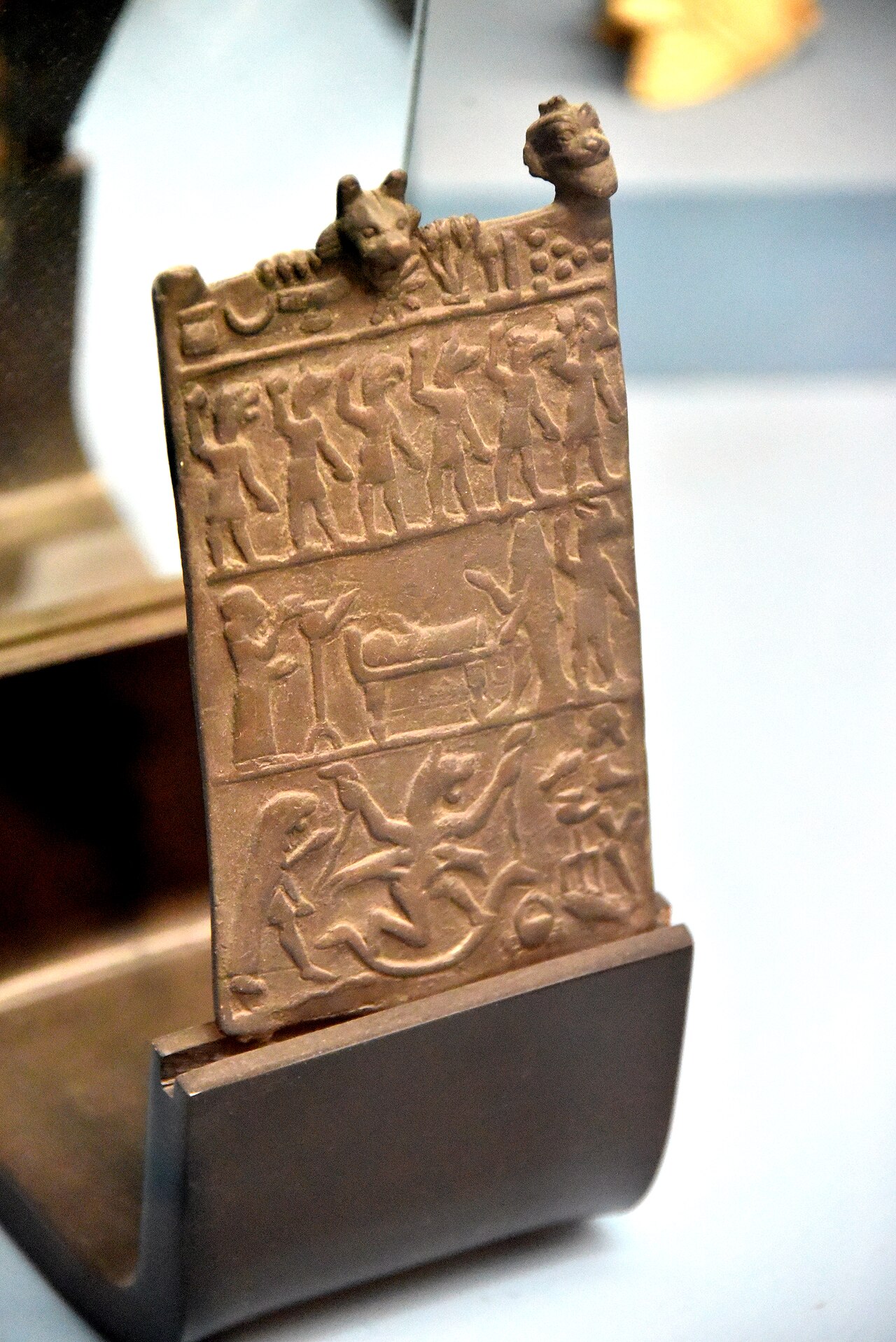

Frequently Asked Questions
What exactly is Ancient Mesopotamian religion?
It is the shared polytheistic belief system practiced across the Sumerian, Akkadian, Assyrian, and Babylonian cultures of the Tigris-Euphrates region. At its heart lay the veneration of natural forces and a sprawling pantheon of personified deities, all bound together by a coherent ritual framework.
What role did Ancient Mesopotamian religion play in the lives of its followers?
It structured everything from temple ceremonies and seasonal festivals to the very legitimacy of kingship. Despite evolving over thousands of years, the tradition kept a remarkably consistent shape, embedding divine hierarchy and cosmic order into the political and social fabric of each successive empire.
How does the story of Ancient Mesopotamian religion end?
The tradition gradually waned as Christianity became the dominant faith in Mesopotamia from the 4th century AD onward. Temple cults largely ceased their operations, and the last known cuneiform tablet was inscribed around 75 AD, marking the final written trace of the practice.
Why is Ancient Mesopotamian religion considered so important?
It stands as one of the longest continuously maintained religious traditions in recorded human history, spanning roughly four thousand years. Its ideas about divine hierarchy, ritual purity, and the structure of the cosmos left a lasting imprint on later Near Eastern and Mediterranean religious thought.
What time period does Ancient Mesopotamian religion cover?
The tradition runs from the mid-4th millennium BC through the 3rd century AD. That gives it an extraordinary span of approximately four millennia across multiple successor civilizations in the same geographic heartland.
More in Religious Traditions 1-24
Elsewhere in the Religious Traditions universe
Spotted an error? Know more?
This is a living reference — every entry is fact-audited, and reader corrections feed straight into our audit queue. Suggest an edit · See this site's audit record