
Australian Aboriginal religion and mythology
Sacred stories linking land, ancestors, and the Dreaming.

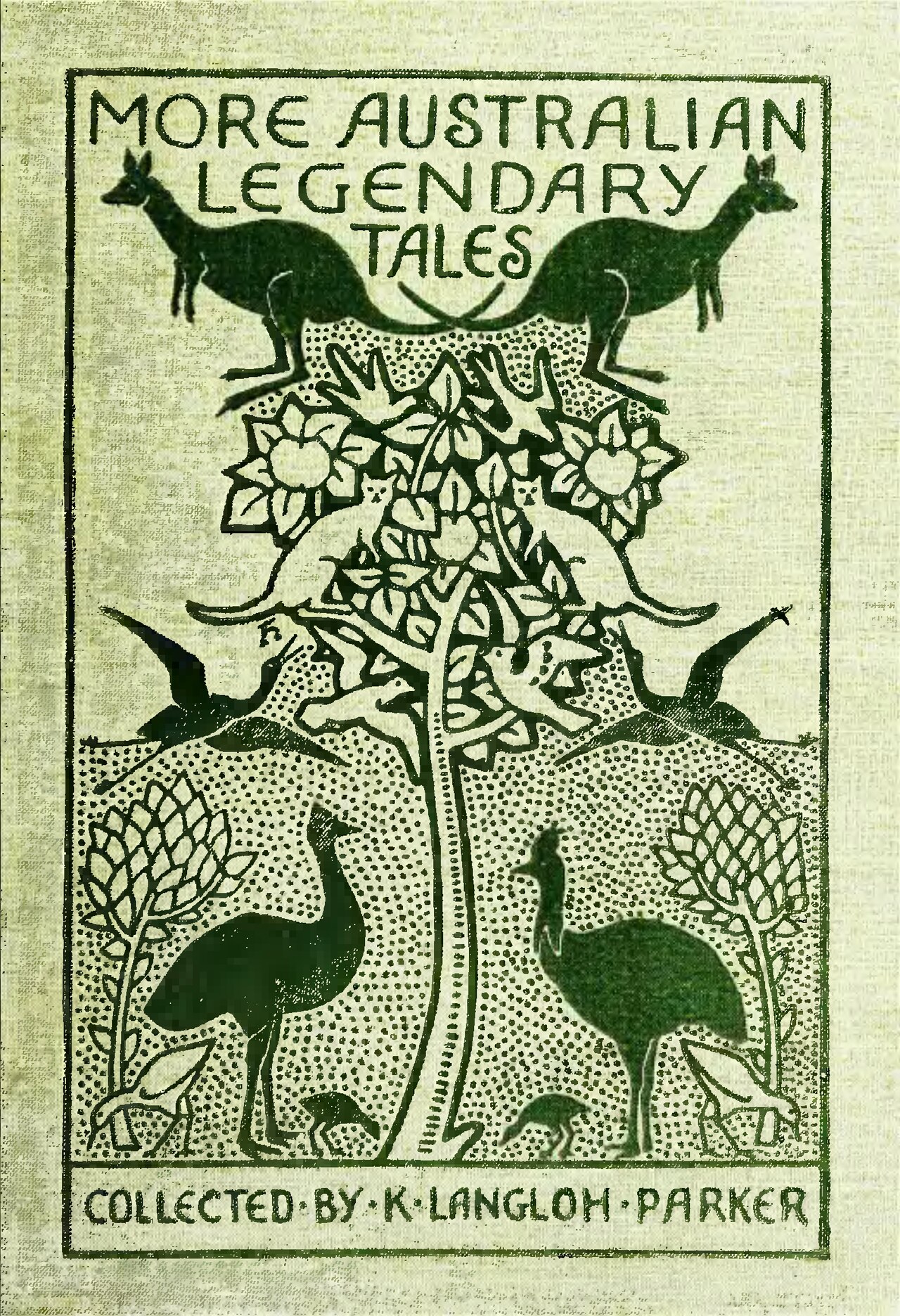
K. Langloh Parker · Public domain
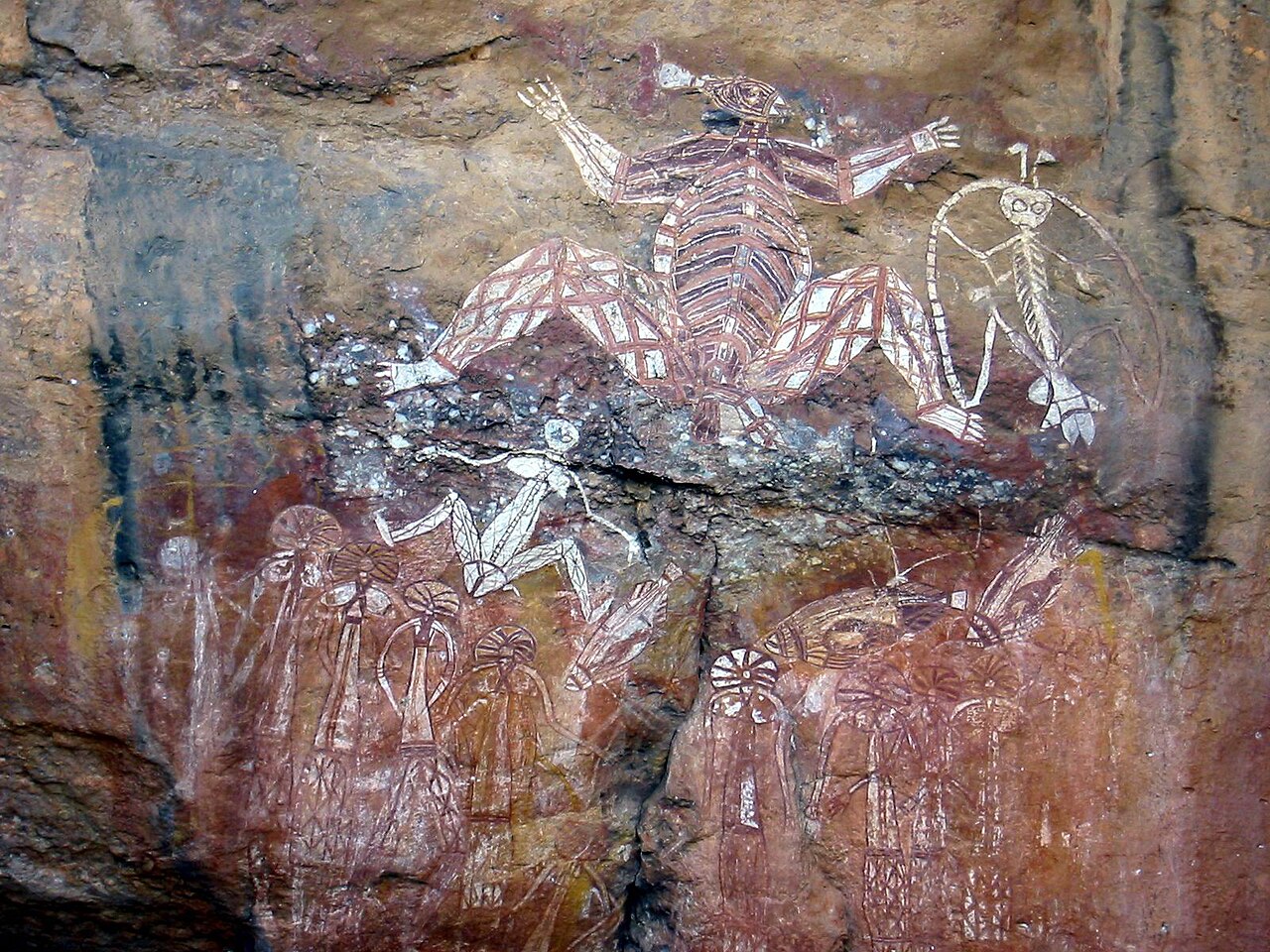
Australian Aboriginal religion and mythology encompasses the sacred spirituality represented in stories performed by Aboriginal Australians within each language group across Australia. These traditions include the Dreamtime (the Dreaming), songlines, and oral literature, often conveying descriptions of local cultural landscapes and adding meaning to the continent's topography from oral history told by ancestors.
- field
- Religion and mythology
- nationality
- Australian Aboriginal
- known_for
- Dreamtime, songlines, oral literature describing ancient landscapes
- antiquity
- Myths accurately describe events dating back more than 10,000 years
Lore & Background
Australian Aboriginal religion and mythology is the sacred spirituality represented in stories performed by Aboriginal Australians within each of the language groups across Australia in their ceremonies. Aboriginal spirituality includes the Dreamtime (the Dreaming), songlines, and Aboriginal oral literature. Aboriginal spirituality often conveys descriptions of each group's local cultural landscape, adding meaning to the whole country's topography from oral history told by ancestors from some of the earliest recorded history. Most of these spiritualities belong to specific groups, but some span the whole continent in one form or another.
Reader's Guide
Australian Aboriginal religion and mythology is significant because it preserves an unparalleled human record of events dating back to the Pleistocene era. Linguist R. M. W. Dixon recorded Aboriginal myths that accurately describe volcanic eruptions more than 10,000 years ago, such as those forming the Crater Lakes on the Atherton Tableland, confirmed by geological and pollen fossil research. Other myths describe past sea levels, including Port Phillip Bay as dry land, a flooded Great Barrier Reef coastline, and Lake Eyre as fertile plains. These stories layer the Australian continent's topography with cultural nuance and deeper meaning, empowering audiences with accumulated wisdom. The myths serve social functions, justifying daily life, shaping ideas, and influencing behavior, while continuously incorporating historical events. Aboriginal specialists believe the myths represent an unwritten library teaching a land-centered society, emphasizing interconnection with creation and the eternal nature of the Land and its stories.
Did You Know?
- Geological research dated volcanic explosions described in Aboriginal myths of the Atherton Tableland as having occurred more than 10,000 years ago.
- Pollen fossil sampling from crater silt confirmed that eucalyptus forests dominated when the craters were formed, matching the myth-tellers' story.
- The Lake Eyre myths tell of the deserts of Central Australia as once having been fertile, well-watered plains, matching geologists' understanding of a wet phase in the early Holocene.
The Dreamtime as a Living Spiritual Framework
Aboriginal spirituality is not a static belief system but a living, performed tradition. It is expressed through stories enacted within ceremonies by members of each language group across the continent. At its heart lies the Dreamtime, also called the Dreaming, a concept that weaves together songlines and oral literature into a cohesive spiritual architecture. These narratives do more than entertain; they convey detailed descriptions of each group's local cultural landscape, effectively adding layers of meaning to the topography of the entire country. The knowledge passed down through oral history from ancestors stretches back to some of the earliest recorded history of the continent. While most of these spiritual traditions belong to specific groups, certain elements span the whole continent in one form or another, creating a shared spiritual grammar that unites diverse communities. The accumulated wisdom of Aboriginal ancestors is thus not merely preserved but actively empowered into selected audiences through ongoing ceremonial performance.
Myths as Ancient Scientific Records
One of the most remarkable dimensions of Aboriginal mythology is its capacity to encode precise geological and environmental history. Linguist R. M. W. Dixon, while recording myths in their original languages, noticed striking coincidences between landscape details in the stories and findings from modern scientific research. On the Atherton Tableland, myths describe the origins of Lake Eacham, Lake Barrine, and Lake Euramoo. Geological dating confirmed the volcanic explosions narrated by Aboriginal tellers occurred over 10,000 years ago, and pollen fossil sampling from crater silt verified that eucalyptus forests, not the current wet tropical rainforests, dominated the landscape at the time. Dixon found similar examples elsewhere: the Port Phillip myth describes the bay as once dry land; a Yarrabah myth names submerged places along the Great Barrier Reef coastline by the forests that once grew there; and Lake Eyre myths recall Central Australian deserts as fertile, well-watered plains. The Australian Heritage Commission listed the Crater Lakes myth on the Register of the National Estate, calling it an unparalleled human record of Pleistocene events.
Diversity and Unity Across 900 Groups
Australia is home to approximately 900 distinct Aboriginal groups, each identified by unique names tied to particular languages, dialects, or distinctive speech mannerisms. Every one of these languages served as the vessel for original myths, from which the distinctive words and names of individual stories derive. The sheer scale of this diversity makes it impossible for scholars to characterise the full range of myths under a single heading. They are variously and continuously told, developed, elaborated, performed, and experienced by group members across the entire continent. Yet within this extraordinary variety, a remarkable pattern emerges: a mixture of diversity and similarity in myths spanning the whole continent. A mythic map of Australia would reveal thousands of characters, varying in importance, all connected with the land. Some emerged at specific sites and remained spiritually in that vicinity; others travelled from somewhere else to somewhere else. Many were shape-changing, transforming from or into human beings, natural species, or features like rocks, yet all left something of their spiritual essence at the places noted in their stories.
Dreamtime Tracks and the Creation of Landscape
Aboriginal mythology functions simultaneously as a catechism, a liturgical manual, a history of civilisation, a geography textbook, and, to a lesser extent, a manual of cosmography. The stories enshrined in these traditions tell significant truths within each group's local landscape, layering the continent's topography with cultural nuance and deeper meaning. According to the Council for Aboriginal Reconciliation's booklet Understanding Country, these narratives generally describe the journeys of ancestral beings, often giant animals or people, across what began as a featureless domain. Mountains, rivers, waterholes, animal and plant species, and other natural and cultural resources came into being as a result of events during these Dreamtime journeys. The routes taken by Creator Beings across land and sea link many sacred sites together in a web of Dreamtime tracks that criss-cross the country. These tracks can run for hundreds or even thousands of kilometres, from desert to coast, and may be shared by peoples in the countries through which they pass. For many Indigenous peoples, the existence of these features in present-day landscapes serves as confirmation of their creation beliefs.
Gallery
Frequently Asked Questions
What is Australian Aboriginal religion and mythology?
It is the collective sacred spirituality of Aboriginal Australians, expressed through oral stories, songs, and ceremonies performed within each language group across the continent. These traditions weave together ancestral narratives, the Dreaming, and descriptions of the local landscape into a unified spiritual framework.
What are the Dreamtime and songlines?
The Dreamtime (or Dreaming) refers to the sacred era in which ancestral beings shaped the world, while songlines are pathways across the land that trace the journeys of those ancestors. Together they form a spiritual map that gives meaning to Australia's topography and connects people to their country.
How old are Australian Aboriginal myths and stories?
Some of the oral narratives describe geological and environmental events that occurred more than 10,000 years ago, making them among the oldest continuous cultural traditions on Earth. They have been passed down through generations of spoken word, song, and ritual performance.
What role do these stories play in Aboriginal life?
They serve as both spiritual guidance and practical knowledge, encoding information about water sources, seasonal changes, and moral law within narrative form. Each language group holds its own distinct set of sacred stories tied to specific landscapes and ancestral figures.
Why is Australian Aboriginal religion and mythology considered important?
It represents one of the world's oldest living spiritual systems, with oral traditions stretching back tens of thousands of years. Its integration of ecology, ancestry, and sacred law offers a distinctive model of how human communities can maintain a deep, reciprocal relationship with the land.
More in Religious Traditions 1-24
Elsewhere in the Religious Traditions universe
Spotted an error? Know more?
This is a living reference — every entry is fact-audited, and reader corrections feed straight into our audit queue. Suggest an edit · See this site's audit record