
Reformed Christianity
Major Protestant branch originating in the 16th-century Reformation.

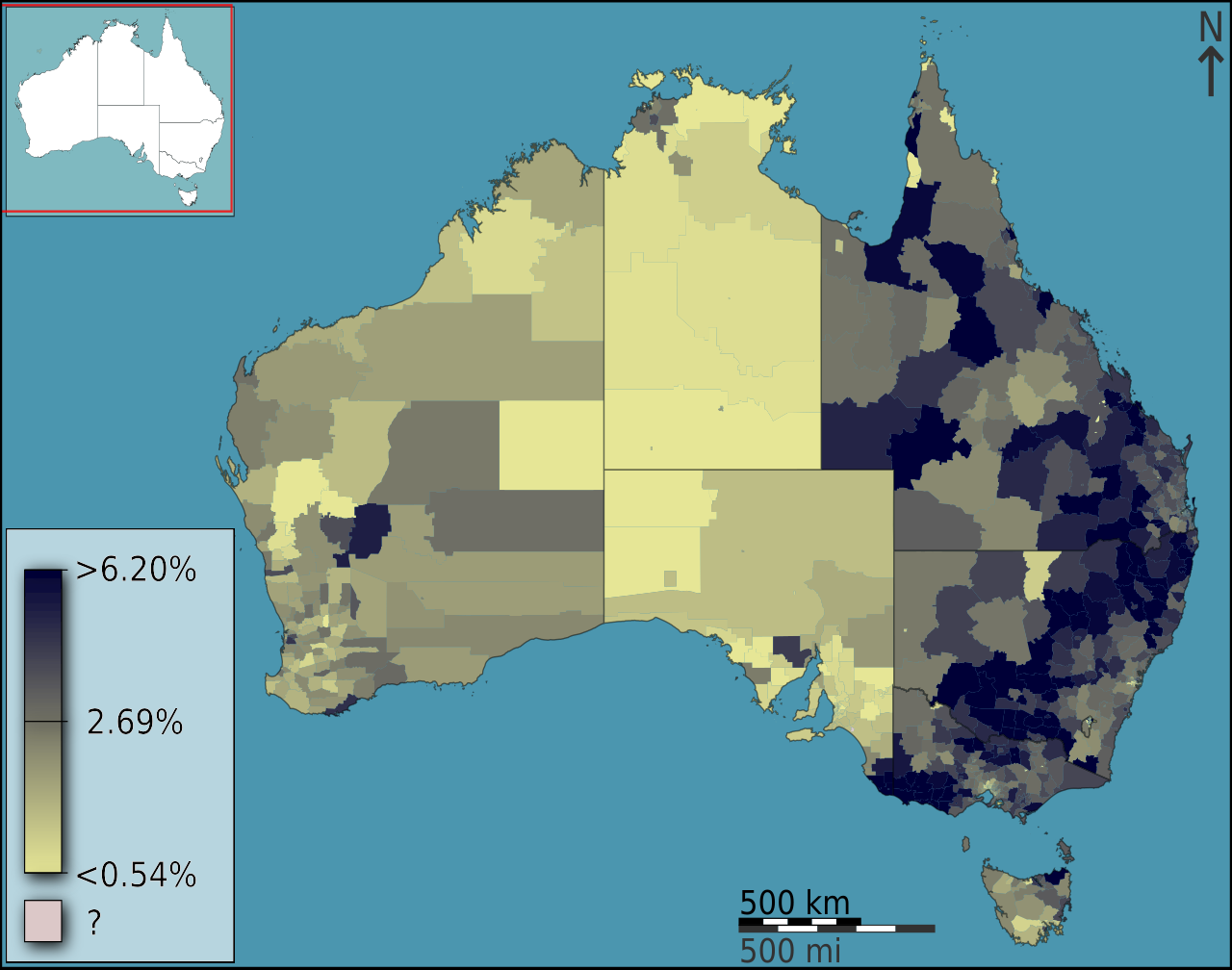
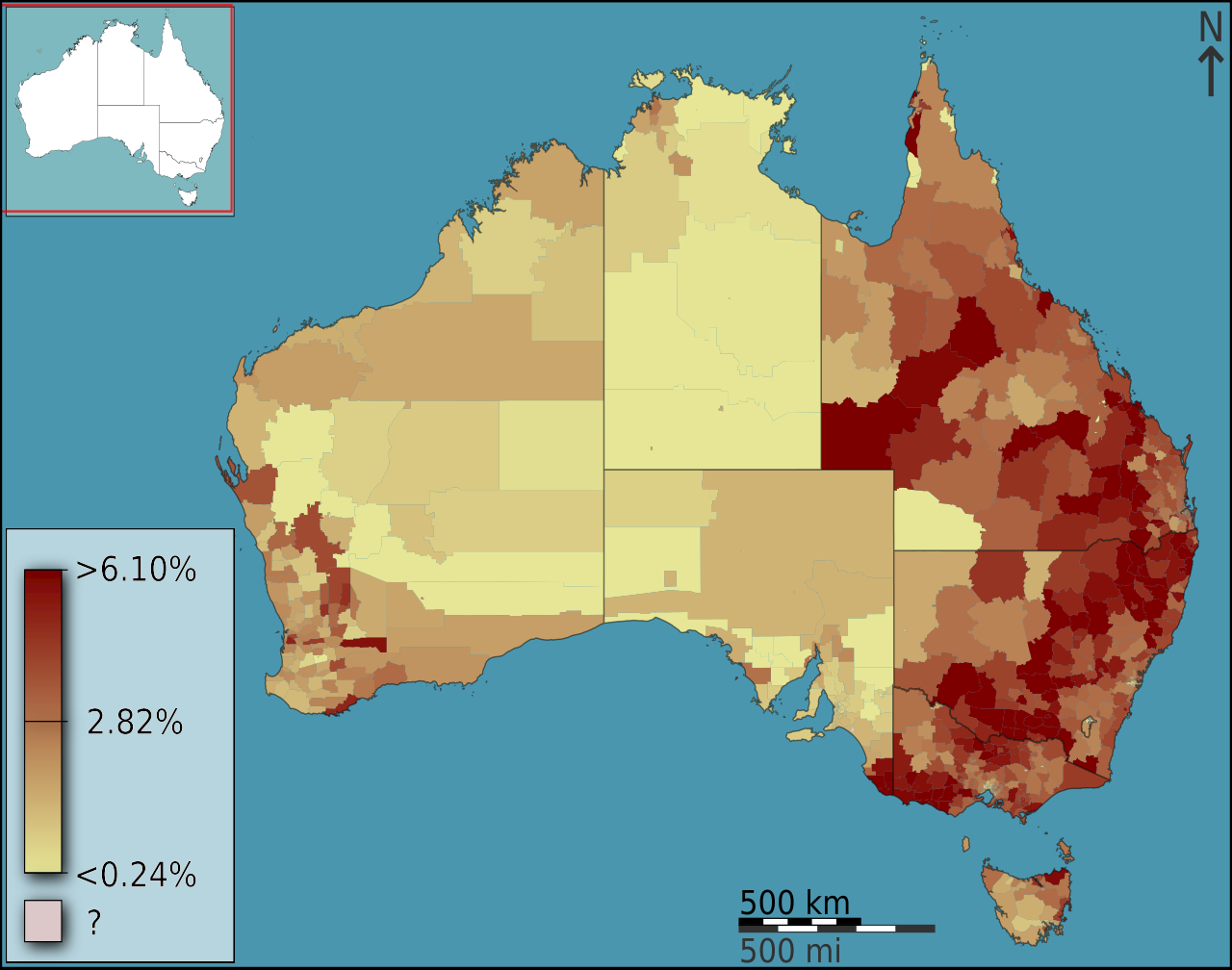
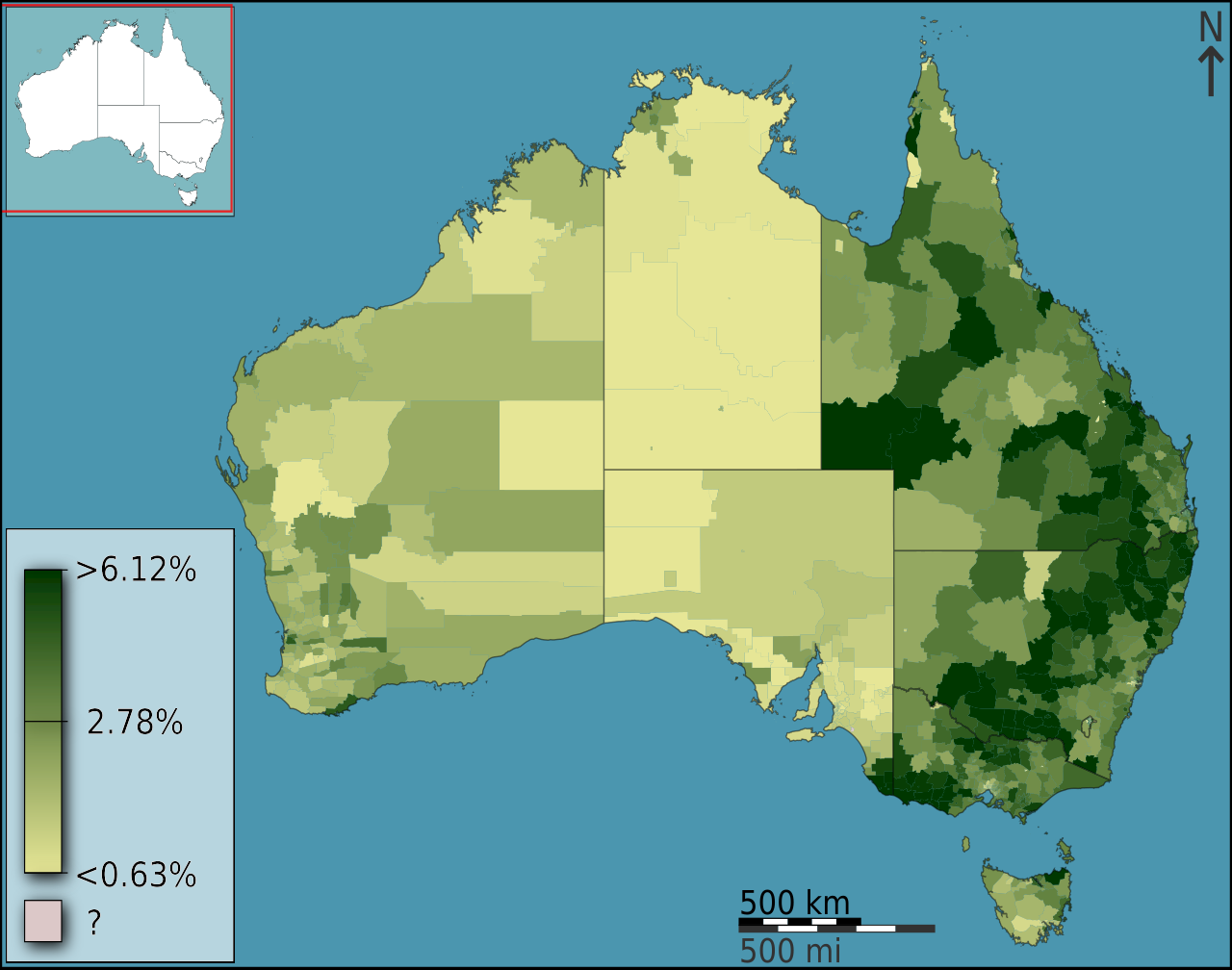
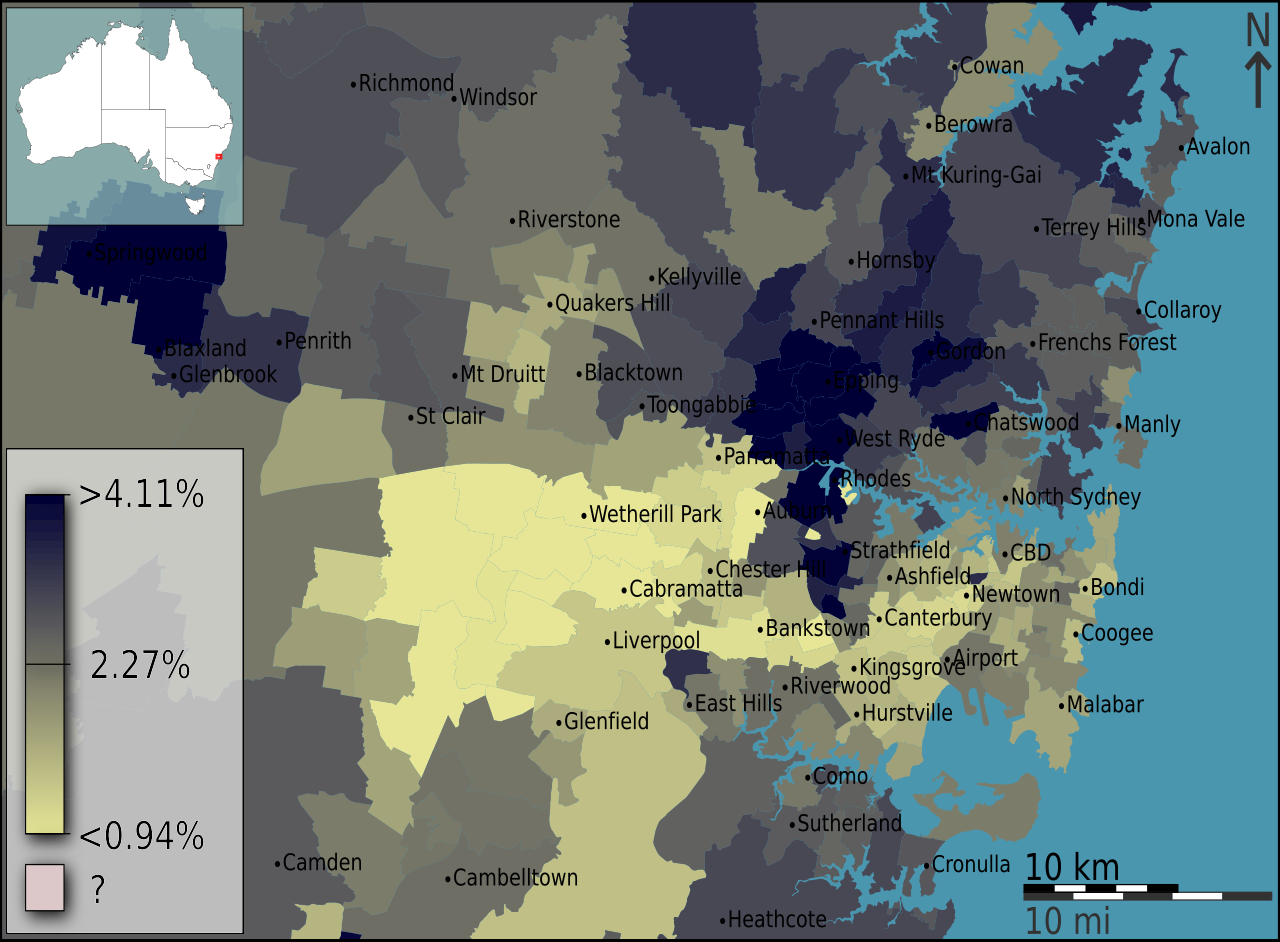
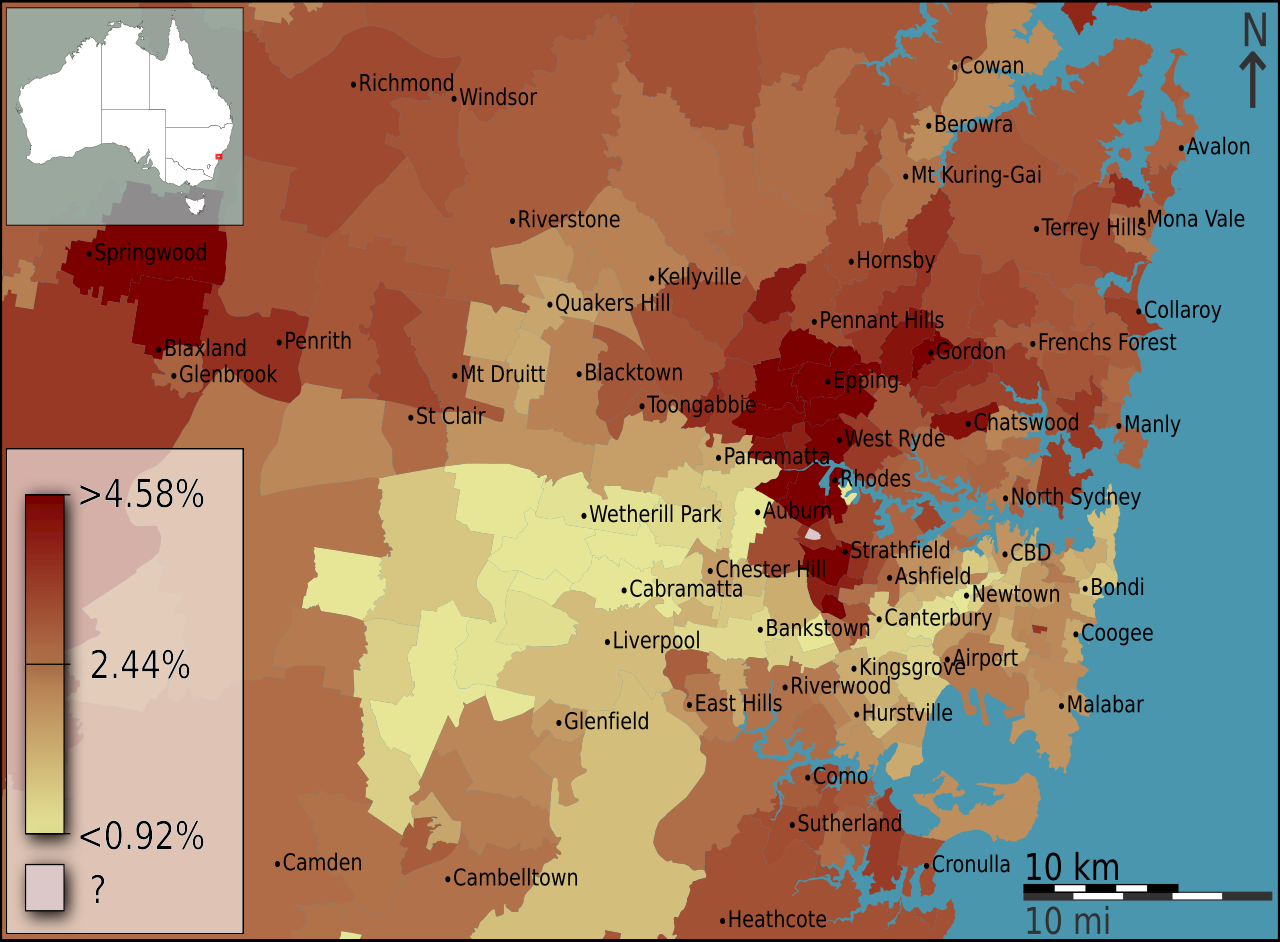
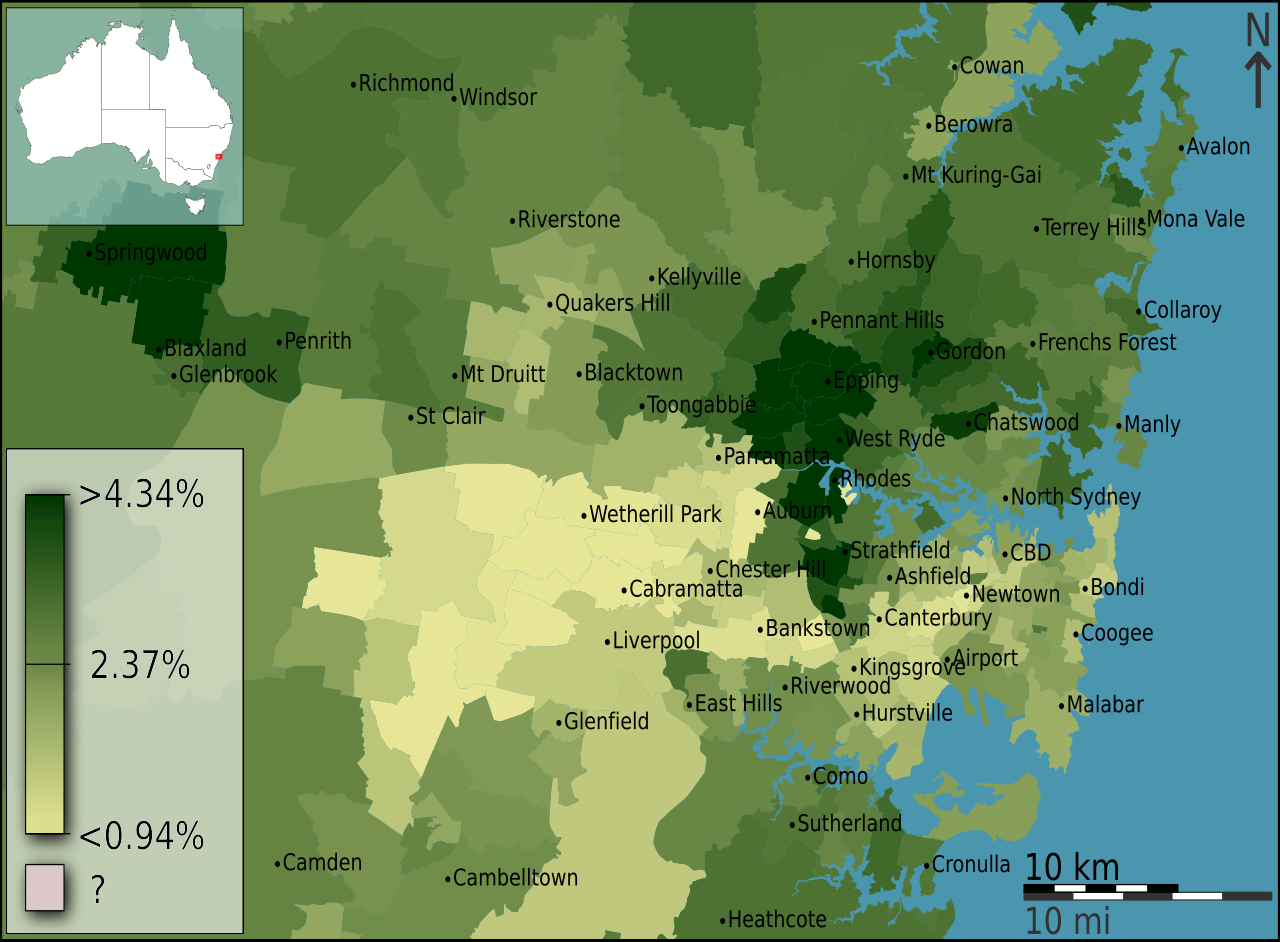
Toby Hudson based on data from the Australian Bureau of Statistics · CC BY-SA 3.0 au
Reformed Christianity is a major branch of Protestantism that began during the 16th-century Reformation. It emphasizes the authority of the Bible, the sovereignty of God, and covenant theology. In the modern day, it is largely represented by the Continental Reformed, Presbyterian, and Congregational traditions, as well as parts of the Anglican, Baptist, and Waldensian traditions, and a minority of people belonging to the Methodist faith known as Calvinistic Methodists.
- born
- 16th century
- field
- Christian theology
- known_for
- Authority of the Bible, sovereignty of God, covenant theology, five points of Ca
- key_figure
- John Calvin
- origins
- Switzerland, Scotland, Netherlands
Verified Timeline
Reader's Guide
Reformed Christianity influenced social, economic, and political life by promoting hard work, trade, and wealth accumulation within ethical limits, laying the groundwork for modern capitalism, especially in Northern Europe and the United States. Its emphasis on elected church elders, the priesthood of all believers, and mixed government inspired early democratic practices, separation of powers, and protections for religious minorities, shaping colonies in North America and liberal political thought in England. Calvinist-inspired reforms also advanced social causes like abolition, women’s suffrage, education, and humanitarian efforts worldwide.
Did You Know?
- Reformed Christianity is also called Calvinism, named after the reformer John Calvin.
- The Canons of Dort, produced after the Arminian Controversy, are the basis for the 'doctrines of grace' also known as the 'five points' of Calvinism.
Position Within the Abrahamic Family
Reformed Christianity occupies a specific niche within the vast Abrahamic tradition, a family of faiths named for the Hebrew patriarch Abraham and unified by the practice of monotheism. This broader grouping, which also encompasses Judaism, Islam, and the Baháʼí Faith, collectively claims at least 3.8 billion adherents spread widely across the globe, with the notable exception of East and Southeast Asian regions. Within that enormous Abrahamic umbrella, Christianity stands as the single largest branch, with the Pew Research Centre's 2025 report placing the global Christian population at approximately 2.3 billion, or 28.8 percent of humanity. Reformed Christianity, as a distinct theological current within that Christian majority, inherits this massive demographic weight while remaining one thread among many in a tradition that has, for centuries, included vigorous proselytizing organizations. The sheer scale of the parent category means that even a substantial Reformed population represents a fraction of a fraction of the world's total religious adherents, yet it participates in the same monotheistic framework that connects it to faiths spanning from the Middle East to every inhabited continent.
The Persistent Counting Problem
Determining exactly how many people identify as Reformed Christians is entangled in a web of methodological disputes that scholars have not resolved. There is no consensus on the best way to measure the religiosity profile of any population, let alone a specific denomination within a major faith. Researchers must decide whether to count individuals based on historically predominant religious culture, active practice, self-identification as adherents, or express identification with a particular denomination. The question of whether to include children or only adults, whether to rely on government statistics or independent surveys, and whether to present single figures or ranges all introduce further uncertainty. In countries like the United States and France, where religion data is not collected in official censuses, researchers must depend on population surveys whose results shift dramatically depending on question phrasing and the definitions of religion employed. Informal or unorganized expressions of faith are especially resistant to counting. For a Reformed Christian community, these ambiguities mean that any published figure is, at best, an approximation shaped by the particular choices of the surveying agency.
A Classification Inherited from the Eighteenth Century
The very act of sorting Reformed Christianity into a tidy category is a product of an intellectual tradition that began in the eighteenth century, when scholars sought to recognize relative degrees of civility across different societies. That original impulse toward ranking has since fallen into disrepute in many contemporary cultures, yet the structural habit of grouping religions into super-groups persists in comparative scholarship. Traditions are arranged by historical origin and mutual influence: Abrahamic faiths rooted in the Middle East, Indian religions from the subcontinent, East Asian traditions built around the concept of Tao, and Afro-American religions originating in Central and West Africa. Reformed Christianity sits firmly within the Abrahamic super-group, sharing its monotheistic DNA with Judaism, Islam, and smaller traditions like the Druze faith, Samaritanism, and Rastafari. The classification is not uniform across cultures or disciplines, and the boundaries between categories are far more porous than the neat headings suggest. A Reformed Christian's faith is thus always partly a product of how the observer chooses to draw the map.
Regional Context and the Christian World
Reformed Christianity does not exist in a geographic vacuum. The Abrahamic religions to which it belongs are spread widely around the world, with the principal exception of the regions surrounding East and Southeast Asia, where Indian and East Asian traditions hold greater influence. The CIA World Factbook and similar reference works track religious composition country by country, and the Christian world is recognized as a distinct regional category alongside the Muslim world, which spans Southwest Asia and North Africa. In Europe, North America, South America, and Oceania, Christianity forms a significant portion of the religious landscape, while in Africa and Asia the picture is more mixed, with indigenous ethnic religions, African diasporic faiths, and new religious movements emerging since the nineteenth century. The Pew Research Centre's 2025 data, covering changes between 2010 and 2020, shows Christianity maintaining its position as the largest single group globally at 2.3 billion, ahead of Islam's 2 billion and the 1.9 billion religiously unaffiliated. For Reformed Christians, this means their communities are embedded in a global Christian majority that is itself in constant demographic flux, shaped by migration, conversion, and the slow erosion or growth of traditional affiliations across every continent.
Gallery
Frequently Asked Questions
What is Reformed Christianity?
Reformed Christianity, more commonly referred to as Calvinism, is a major Protestant tradition that grew out of the 16th-century Reformation. It centers on the Bible as the ultimate authority, the supreme sovereignty of God, and the framework of covenant theology.
What are the core beliefs of Reformed Christianity?
The tradition is best recognized for the five points of Calvinism, which stress God's overarching authority and Scripture as the final word on faith and practice. It also teaches that Christ is spiritually present in the Lord's Supper, setting it apart from other Protestant views of the Eucharist.
Where and when did Reformed Christianity originate?
The movement took shape during the 16th century, with its earliest strongholds in Switzerland, Scotland, and the Netherlands. John Calvin is widely regarded as its foundational figure, shaping much of its theological framework from his work in Geneva.
What modern denominations trace their lineage to Reformed Christianity?
Today the tradition is most visibly carried on by Continental Reformed churches, Presbyterian bodies, and Congregational congregations. It also influences portions of the Anglican, Baptist, and Waldensian traditions, as well as a smaller group known as Calvinistic Methodists.
Why is Reformed Christianity significant in Christian history?
As one of the principal branches of Protestantism, it shaped centuries of theological debate and church governance across Europe and beyond. Its emphasis on covenant theology and God's sovereignty continues to influence how millions of believers understand their relationship with the divine.
More in Religious Traditions 25-35
Elsewhere in the Religious Traditions universe
Spotted an error? Know more?
This is a living reference — every entry is fact-audited, and reader corrections feed straight into our audit queue. Suggest an edit · See this site's audit record