
Protestantism
Christian movement originating in the 16th-century Protestant Reformation.

Silar · CC BY-SA 4.0
Protestantism is a form of Christianity that originated in the Protestant Reformation, a 16th-century movement aimed at reforming the Catholic Church from perceived errors, abuses, and discrepancies. It emphasizes justification of sinners through faith alone, salvation by unmerited divine grace, the priesthood of all believers, and the Bible as the sole infallible source of authority. The five solæ summarize its basic theological beliefs.
- originated
- 16th century, Holy Roman Empire
- other_reformers
- John Calvin, Huldrych Zwingli, John Knox, Thomas Cranmer
- major_denominational_families
- Anglican/Episcopal, Baptist, Calvinist/Reformed, Lutheran, Methodist, Moravian
Lore & Background
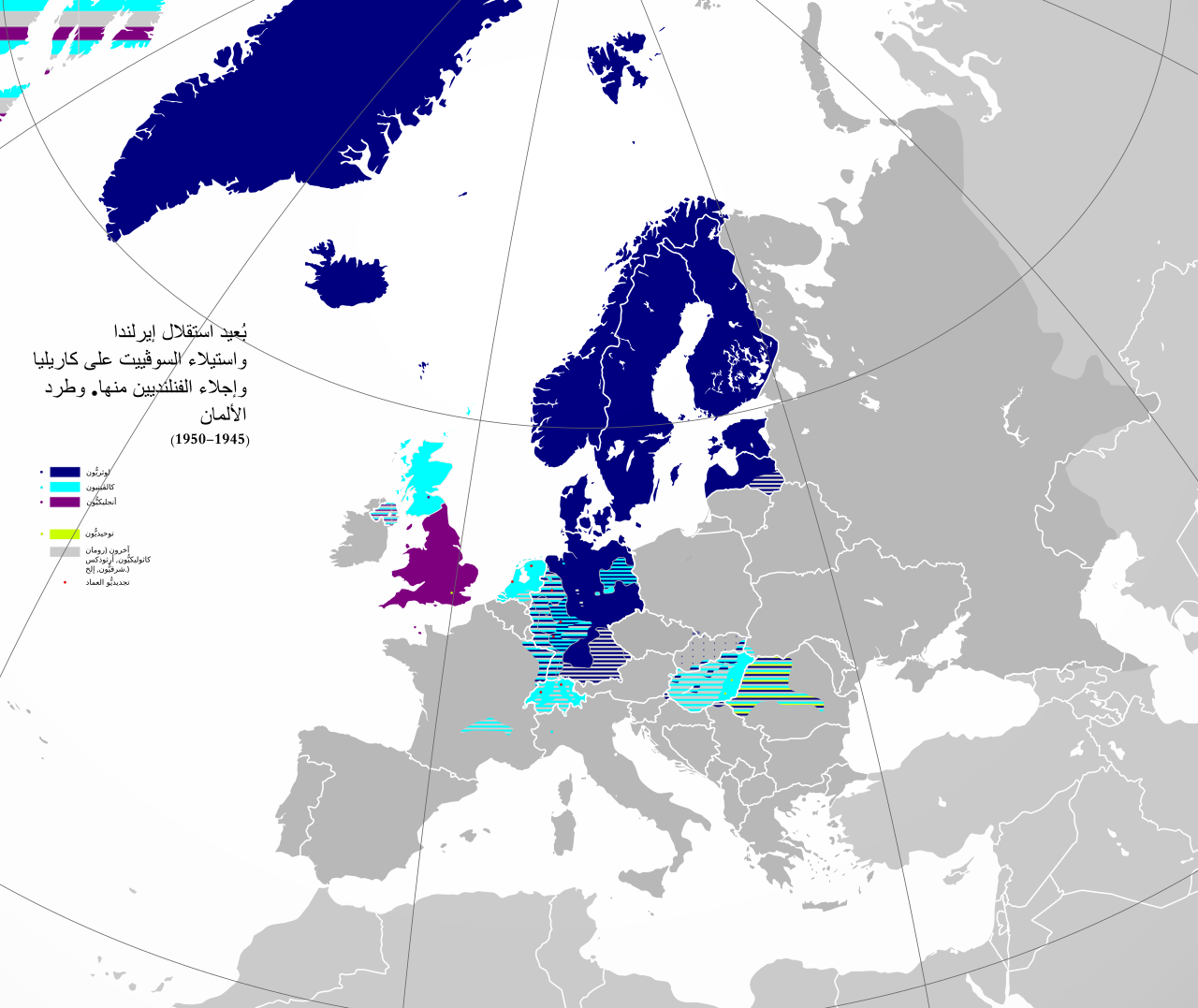
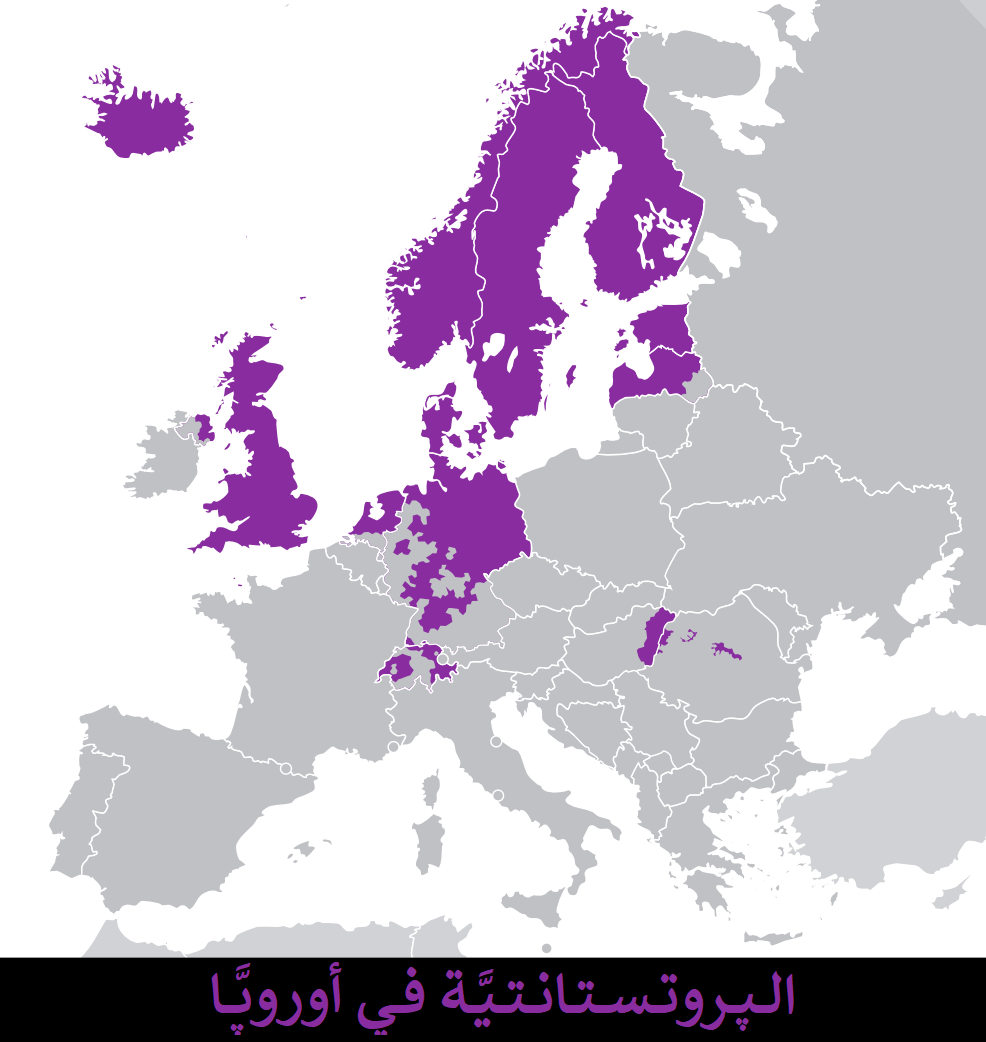
Luther argued that salvation is a gift from God given to those who have faith, not something earned or purchased. The movement spread as Lutheranism reached Denmark–Norway, Sweden, Finland, Livonia, and Iceland, while Calvinist churches spread in Germany, Hungary, the Netherlands, Scotland, Switzerland, France, Poland, and Lithuania, led by reformers such as John Calvin, Huldrych Zwingli, and John Knox. The political separation of the Church of England from the Catholic Church under King Henry VIII began Anglicanism, with Thomas Cranmer shaping Anglican doctrine.
Reader's Guide
Protestantism is divided into numerous denominations based on theology and ecclesiology, with most Protestants belonging to families such as Anglicans, Baptists, Calvinists, Lutherans, Methodists, and Moravians. Adventists, Pentecostals, Quakers, Plymouth Brethren, independent churches, and Charismatic Christianity are also broadly considered part of Protestantism. Independent and non-denominational churches have expanded rapidly, termed 'popular Protestantism' by scholars. Historically, the term 'Protestant' was initially political, but later came to refer to any Western church adhering to main Protestant principles. The theology rests on three fundamental principles: Sola Scriptura (the Bible as highest authority), with Lutherans and Reformed holding to a critical reading of scripture, while Methodists and Anglicans teach prima scriptura. The movement's legacy includes a global presence, with estimates of over 800 million adherents in the early 21st century, and a continuing dynamic growth of independent and Pentecostal movements.
Did You Know?
- Martin Luther disliked the term 'Lutheran' and preferred 'evangelical,' derived from the Greek word for 'good news.'
- French and Swiss Protestants preferred the term 'reformed' as an alternative name for Calvinists.
- The five solæ summarize the basic theological beliefs of mainstream Protestantism.
The Spark of Reform and Core Theology
Protestantism was born out of a desire to correct what its founders saw as deep-seated errors and abuses within the Catholic Church. The movement ignited in 1517 in the Holy Roman Empire when Martin Luther posted his Ninety-five Theses, a direct challenge to the sale of indulgences—certificates that promised remission of temporal punishment for sins. Luther rejected the notion that forgiveness could be bought or earned, insisting instead that salvation is an unmerited gift from God, received through faith alone. This conviction became the theological bedrock of the tradition, alongside the priesthood of all believers and the conviction that Scripture is the sole infallible authority for faith and practice. These principles, later crystallized into the five solae, remain the defining markers of mainstream Protestant theology and distinguish it sharply from the medieval ecclesiastical order it sought to reform.
Geographic Expansion and the Reformers' Networks
The Reformation did not remain confined to a single nation. Lutheranism radiated outward from Germany into Denmark–Norway, Sweden, Finland, Livonia, and Iceland, reshaping the religious landscape of much of Northern Europe. Meanwhile, the Calvinist and Reformed tradition took root in Germany, Hungary, the Netherlands, Scotland, Switzerland, France, Poland, and Lithuania, propelled by figures such as John Calvin, Huldrych Zwingli, and John Knox. A distinct path emerged in England, where King Henry VIII's political break with Rome gave birth to Anglicanism; under the theological guidance of Thomas Cranmer, the Church of England forged its own doctrinal identity and joined the broader Reformation family. Together, these parallel streams of reform—Lutheran, Reformed, and Anglican—created a patchwork of Protestant communities across the continent, each carrying the shared conviction of scriptural authority and grace-based salvation while developing distinct liturgical and ecclesial expressions.
The Politics of a Name
The very word Protestant carries a political origin. In 1529, six princes of the Holy Roman Empire along with rulers of fourteen Imperial Free Cities lodged a formal protest against the edict of the Diet of Speyer, and it was these dissenters who first bore the label. Initially a term of political opposition rather than theological self-identification, it gradually broadened to encompass any adherent of the Reformation. Martin Luther himself resisted the label, insisting that Christian or evangelical—drawn from the Greek euangelion, meaning good news—were the only fitting names for those who professed faith in Christ. In the German-speaking world, evangelisch still functions as the standard word for Protestant, while the English evangelical has drifted toward describing a specific subset rooted in Puritan and later American traditions. Reformed and Calvinist communities in France and Switzerland preferred the term reformed, and Lutherans only adopted Lutheran mid-century to set themselves apart from Philippists and Calvinists.
A Living Mosaic of Denominations
Protestantism is not a single institution but a vast constellation of denominations distinguished by theology and ecclesiology. Its major families include Anglicans and Episcopalians, Baptists, Calvinists and Reformed, Lutherans, Methodists, and Moravians, while broader categories encompass Adventists, Pentecostals, Quakers, Plymouth Brethren, Charismatic Christians, and the rapidly growing non-denominational independent churches. A key theological distinction sets most Protestants apart from the Catholic, Eastern Orthodox, Oriental Orthodox, and other ancient churches: the concept of an invisible church rather than a single visible one true church, though historic Lutheranism is a notable exception that retains that claim. Scholars such as Peter L. Berger have labeled these diverse movements popular Protestantism and recognized them as one of the most dynamic religious forces in the contemporary world. Population estimates vary—Hans Hillerbrand placed the total at roughly 833 million in 2004, while the World Christian Database counted about 638 million Protestants and 426 million Independents in early 2026—reflecting both the breadth and the ongoing fragmentation of the tradition.
Gallery
Frequently Asked Questions
What are Protestantism's core beliefs or 'powers'?
The tradition centers on the idea that a person is made right with God through faith alone, that salvation is an unearned gift of divine grace, and that every believer can approach God directly without a priestly middleman. Scripture is treated as the single infallible authority on matters of faith, a principle often summarized by the five solae.
Why is Protestantism important in the broader religious picture?
By dismantling the notion that a single institutional hierarchy mediates access to God, Protestantism fundamentally restructured how hundreds of millions of people worship, read Scripture, and organize their communities. It also gave rise to an extraordinary diversity of denominations, making it one of the most internally varied branches of Christianity.
More in Religious Traditions 25-35
Elsewhere in the Religious Traditions universe
Spotted an error? Know more?
This is a living reference — every entry is fact-audited, and reader corrections feed straight into our audit queue. Suggest an edit · See this site's audit record