
Quakers
A Christian movement emphasizing direct experience of Christ and peace.
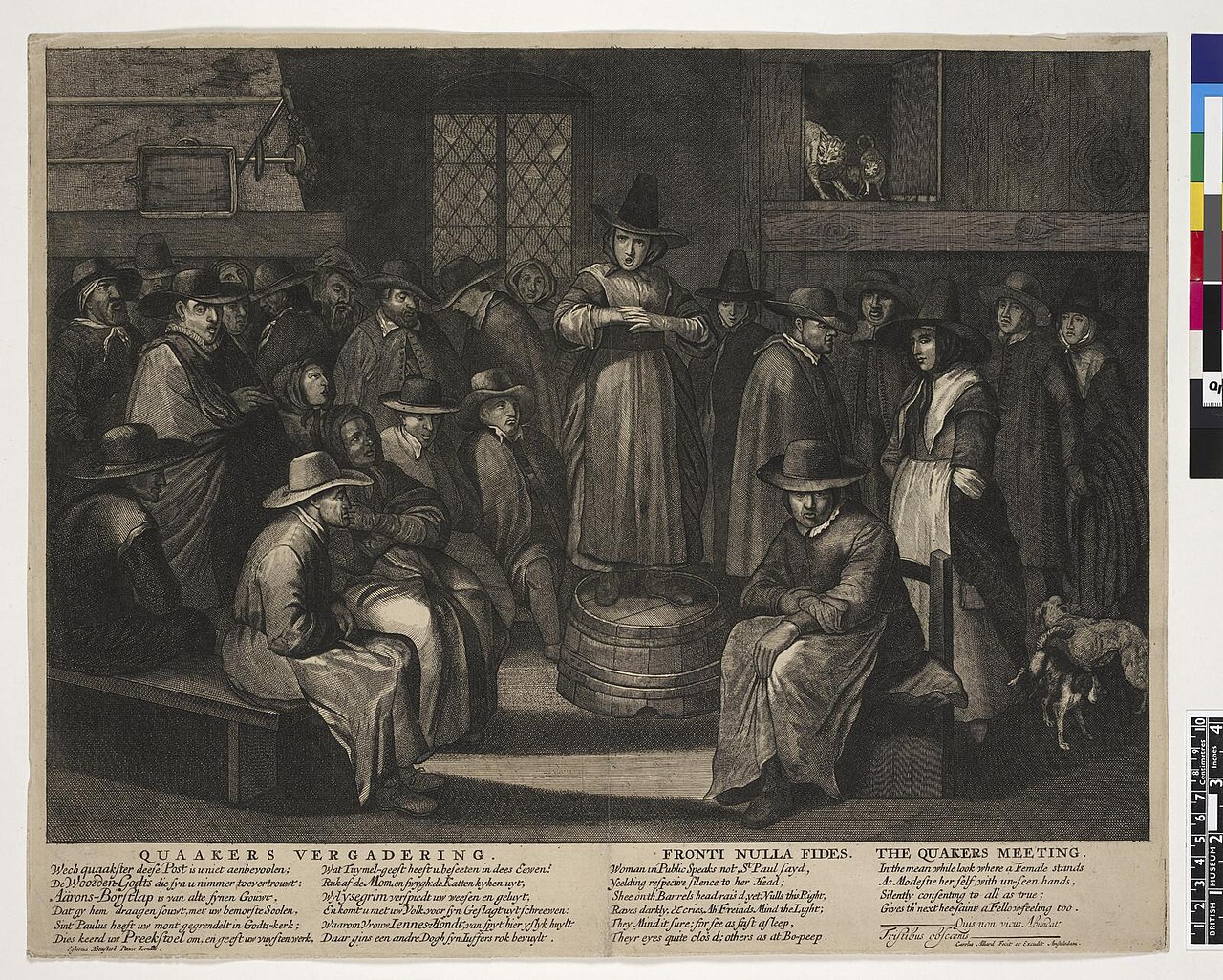
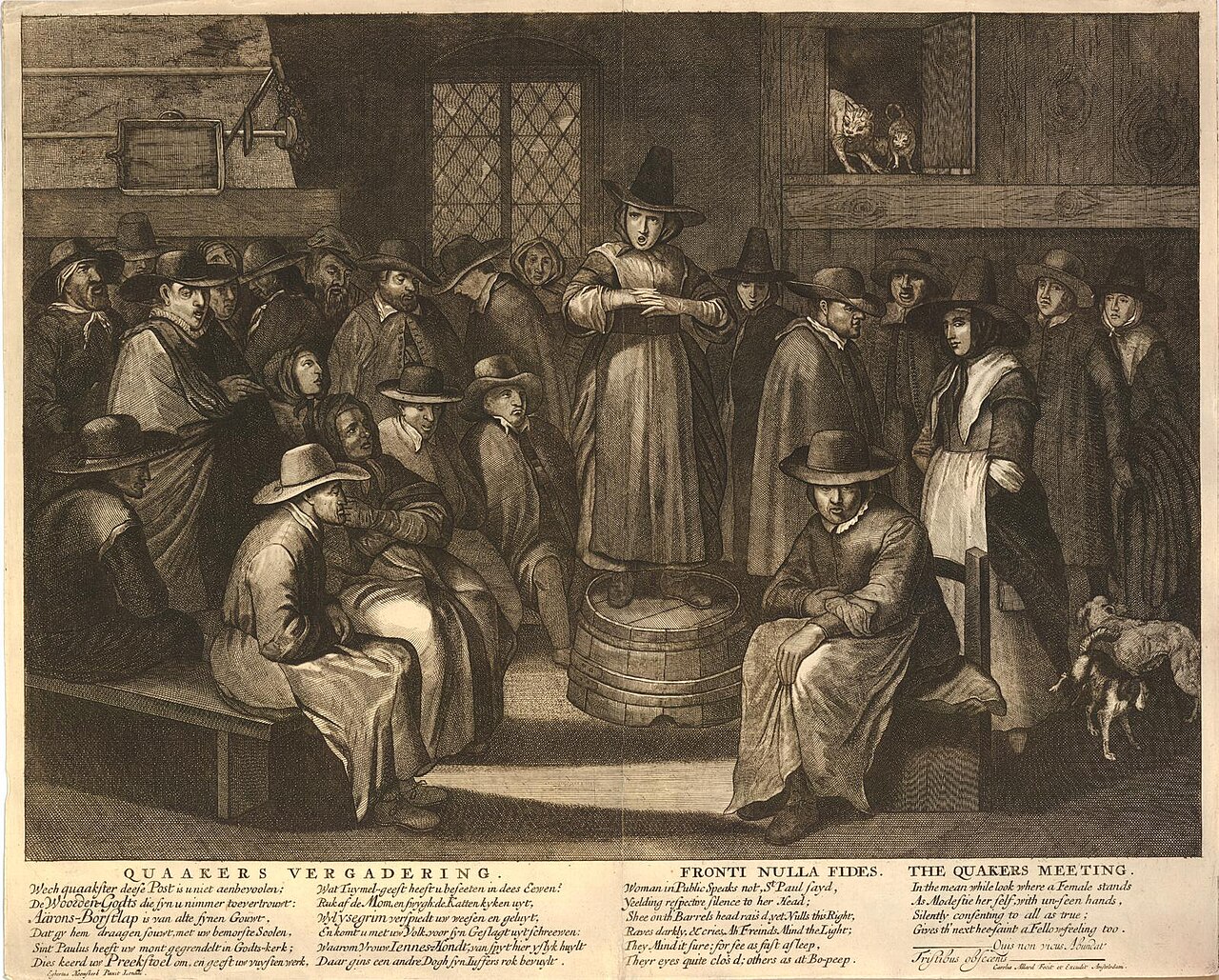
Quakers, also known as the Religious Society of Friends, originated as a dissenting Protestant movement in mid-17th-century England. The founder, George Fox, became convinced after a revelation in 1647 that individuals could have a direct experience of Christ without ordained clergy, a central theme being that "Christ has come to teach his people himself." The name "Quaker" was first used derisively in 1650 when Fox told a magistrate to "quake before the authority of God." Early Quakers, including the Valiant Sixty, traveled widely preaching the Gospel, and many early ministers were women. They based their faith on direct religious experience of Christ and a belief in the universal priesthood of all believers, inspired by the First Epistle of Peter. Key theological texts include Robert Barclay's *A Catechism and Confession of Faith* (1673) and the Richmond Declaration of Faith (1887). Historically, Quakers avoided creeds and hierarchical structures, used "thee" as an ordinary pronoun, wore plain dress, practiced teetotalism, refused to swear oaths or participate in war, and opposed slavery. They founded notable financial institutions like Barclays and Lloyds, manufacturers such as Clarks and the confectionery firms Cadbury, Rowntree, and Fry, and engaged in philanthropic efforts including abolition and prison reform. In 1947, the British and American Friends Service Committees received the Nobel Peace Prize. Today, Quaker worship varies: unprogrammed (waiting) worship, mainly silent with unprepared vocal ministry, is practiced by about 11% of Quakers, dominant in the UK, Canada, and parts of the US. Evangelical Quakers, about 40% of the total, hold programmed services with singing and a prepared Bible message, a form that developed during the 19th-century Second Great Awakening and is dominant in Africa and parts of the US. The remaining 49% practice semi-programmed worship, mixing hymns and readings with silence. As of 2017, there were an estimated 377,557 adult Quakers worldwide, with 49% in Africa and 22% in North America.
Lore & Background
Quakers, formally the Religious Society of Friends, are a historically Protestant Christian movement that emerged in mid-17th-century England. The name originated as a derogatory term after founder George Fox told a judge to "quake before the authority of God." Members refer to each other as Friends, a term drawn from the Bible. Central to Quaker belief is the concept of the inward light, the idea that every human can be directly guided by God, making the witness of God known to all. They profess a priesthood of all believers, inspired by the First Epistle of Peter, and generally avoid creeds and hierarchical structures. Quaker theology encompasses evangelical, liberal, orthodox, and traditional understandings, with some since the 1960s adopting universalist or nontheist perspectives. Worship varies: unprogrammed or waiting worship, originating with Fox, is largely silent with unprepared vocal ministry, dominant in the United Kingdom, Canada, Australia, and parts of the United States. Programmed worship includes hymns and a prepared Bible message, often led by a pastor, and is common in Africa and parts of the United States, developing during the 19th-century Second Great Awakening. Historically, Quakers used "thee" as an ordinary pronoun, wore plain dress, practiced teetotalism, refused oaths and war, and opposed slavery. They founded banks like Barclays and Lloyds, manufacturers such as Clarks and Cadbury, and engaged in abolition, prison reform, and social justice. In 1947, Quakers received the Nobel Peace Prize for their peace work. As of 2017, there were an estimated 377,557 adult Quakers, with 49% in Africa and 22% in North America.
Reader's Guide
Quakers have had a lasting impact through their commitment to peace, social justice, and economic enterprise. They refused to participate in war and opposed slavery, and their philanthropic efforts included prison reform and abolition. Quakers founded major financial institutions such as Barclays, Lloyds, and Friends Provident, as well as manufacturers like Clarks shoes and confectionery firms Cadbury, Rowntree, and Fry. Quaker worship varies: about 11% practice unprogrammed waiting worship, 40% belong to evangelical branches with programmed services, and 49% hold semi-programmed worship. Their legacy includes a continued emphasis on direct spiritual experience, avoidance of creeds, and a diverse range of theological perspectives, including evangelical, liberal, and universalist approaches.
Did You Know?
- According to a 2012 survey, some 49% of Quakers worldwide are in Africa, followed by 22% in North America.
- Individual Quaker families founded banks including Barclays and Lloyds, as well as confectionery firms Cadbury, Rowntree, and Fry.
Gallery


Frequently Asked Questions
What are Quakers?
Quakers, formally called the Religious Society of Friends, are a Christian movement that emerged in England during the 1600s. They center their faith on the idea that every person can access divine guidance directly, without needing a formal clergy.
What is the Quaker belief in the 'inward light'?
Quakers hold that each individual carries an inner spark of God's presence that can guide them toward truth and righteousness. This conviction underpins their practice of unprogrammed worship, where members gather in silence and speak only when moved by that inner prompt.
Why are Quakers strongly associated with pacifism?
Rooted in their conviction that the divine light lives in every person, Quakers have historically rejected violence and warfare as incompatible with their faith. This commitment led them to refuse military service and to become prominent advocates for peace throughout the centuries.
Why did Quakers receive the Nobel Peace Prize in 1947?
The Nobel committee honored the Religious Society of Friends for their sustained, century-long dedication to resolving conflicts through dialogue and their tireless work in prison reform, abolition of slavery, and broader social justice. The award recognized a tradition of nonviolent advocacy stretching back to the group's founding.
More in Religious Traditions 1-24
Spotted an error? Know more?
This is a living reference — every entry is fact-audited, and reader corrections feed straight into our audit queue. Suggest an edit · See this site's audit record